Serum vs ampoule: how to choose and layer
Updated · Unboxia, Dublin · 4 min read
Serum vs ampoule is a question in almost every skincare routine, and the honest answer is that they do much the same job: both are leave-on steps smoothed on after cleansing and toning, before moisturiser. The real difference is strength and focus. An ampoule carries a higher share of one or two star ingredients for a short, targeted run, while a serum is the lighter everyday option.
What a serum does
A serum is a lightweight, leave-on step that carries active ingredients in a form your skin can take most days. It goes on after your toner or essence and before anything heavier, and it is usually where you pick your main ingredient — niacinamide for the look of an even tone, hyaluronic acid for a hit of hydration, or peptides for a smoother-looking finish.
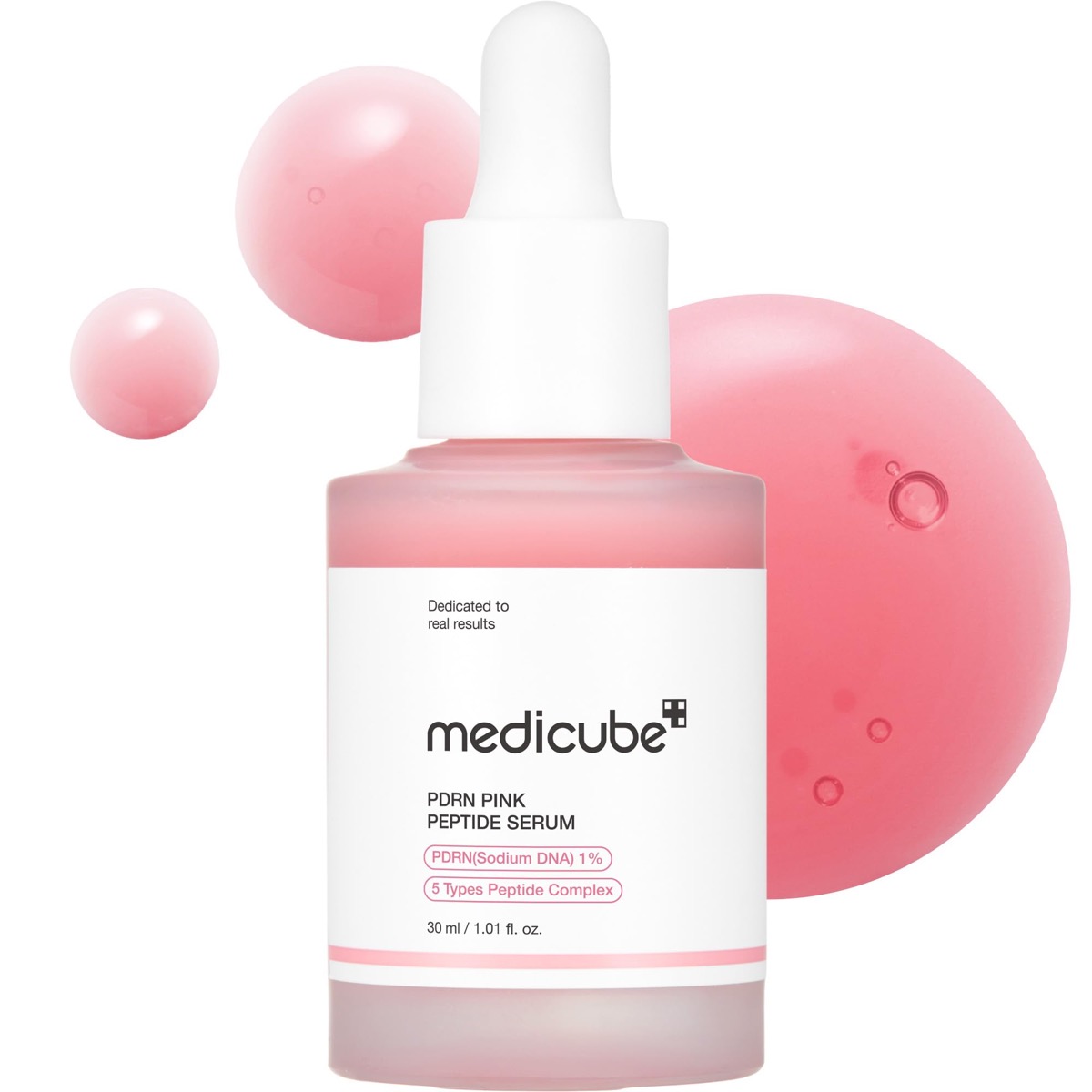
Take the medicube PDRN Pink Peptide Serum as an example. medicube builds it around salmon DNA PDRN, peptides and niacinamide, and the pink shade comes from vitamin B12 rather than any added colour, so it rinses clear and will not stain. The texture is light and sinks in within a minute or two, which is what you want from something worn under moisturiser every morning and night. New to niacinamide? Our guide to using niacinamide covers how to pair it with other actives.
What an ampoule does
An ampoule started out as the more concentrated member of the family: a higher dose of one or two hero ingredients, often sold in smaller bottles for a focused stretch of use. In modern Korean skincare that line has blurred, and plenty of ampoules are now gentle enough to wear morning and night like a serum.
The SKIN1004 Madagascar Centella Tone Brightening Ampoule is a good case. SKIN1004 formulates it with niacinamide, tranexamic acid, a vitamin C derivative and Centella asiatica, all held inside tiny Madewhite capsules that dissolve the moment you press them into the skin. SKIN1004 calls the feel mid-weight and fast-absorbing, and points to normal, dry or combination skin. Centella is the thread it shares with lighter formats, so if that ingredient is on your radar, our guide to using centella goes deeper.
Serum vs ampoule: the main differences
Put side by side, a few patterns hold up more often than not:
- Strength: an ampoule usually leans on a higher share of its main ingredient, while a serum is balanced for everyday wear.
- Texture: serums range from watery to a light gel; ampoules can feel either more essence-like or a little richer, depending on the formula.
- How long you reach for it: ampoules are often used in focused stretches, whereas a serum tends to be a routine fixture.
- Where it sits: both belong in the same step, after your watery layers and before cream.
None of this is a hard rule. The SKIN1004 ampoule above can be worn daily, and a rich serum can feel every bit like an ampoule. Read the texture and the ingredient list, not just the word on the bottle.
How to layer a serum and an ampoule
Own both and want to use them together? Go thinnest to thickest so each layer has a chance to sink in:
- Start on freshly washed skin and, if you use one, press in a toner or essence.
- Put down the runnier of the two first — a few drops, patted in — then pause about a minute until it is no longer wet to the touch.
- Add the heavier one the same way, pressing rather than rubbing.
- Seal it in with a moisturiser.
- Come morning, your last layer is sun protection — our guide to using sunscreen explains how much to use.
Most people do not need two of these daily. A common setup is one serum as the everyday step, with an ampoule brought in when you want to focus on a single thing for a while.
Can you use an ampoule instead of a serum?
Yes. Because the two share a step, you rarely need both. If your skin is sitting comfortably and you simply want to keep it that way, one lightweight serum is plenty. Bring in an ampoule when you want to put more behind a single goal — the look of an uneven tone, dryness or dullness — for a few weeks at a stretch.
Choose by concern and by feel. If you like something that vanishes under make-up, a light serum or an essence-like ampoule will suit you; if you prefer to feel a layer on the skin, a richer formula fits better. You can see the options together in our serums and ampoules, and the steps that come before them in toners and essences.
How to choose your first serum or ampoule
Start from the job you want done, not the word on the box. For an everyday step that slots into almost any routine, a balanced serum is the easy first move. If you would rather zero in on the look of a more even tone for a season, an ampoule gives you that focus. Whichever you pick, add one new active at a time, allow it a few weeks before you make the call, and keep everything else pared back. When your order is on its way, our delivery page explains what to expect.
Questions people ask
Is an ampoule stronger than a serum?
Often, but not always. An ampoule traditionally carries a higher share of its main ingredient, while a serum is balanced for daily use. These days the two overlap, so read the ingredient list and the texture rather than trusting the word on the label.
Do I need both a serum and an ampoule?
No. They sit in the same step of your routine, so most people are fine with one. Keep a serum as your everyday step and add an ampoule when you want to focus on a single goal, such as the look of an uneven tone, for a few weeks.
Which goes first, the serum or the ampoule?
Apply the thinner, more watery one first and let it settle for about a minute, then layer the heavier one on top. Finish with moisturiser, and with sun protection in the morning.
Can I use a serum or ampoule every day?
Most lightweight formulas are made for daily morning and night use. If a product leans on a strong active and your skin is new to it, start a few times a week and build up as your skin gets used to it.
Where does a serum or ampoule go in a Korean routine?
After cleansing and your watery steps, such as toner and essence, and before heavier creams. Think thinnest to thickest: the lighter the texture, the earlier it goes on.